


Reactive dogs often react strongly to stimuli like other dogs, people, or noises when they’re on a leash. This reactivity can look like barking, lunging, or pulling. It’s important to remember that your dog isn’t being “bad” on purpose. They’re usually feeling overwhelmed or unsure.
Reactive dog leash training focuses on teaching your dog to stay calm and focused despite distractions. This kind of training is all about building trust and communication between you and your dog. It’s a step-by-step process that requires consistency and kindness.
Here are some key points to keep in mind:
Stay calm yourself: Dogs pick up on your energy. If you’re relaxed, your dog is more likely to feel safe.
Use positive reinforcement: Reward your dog for calm behavior with treats, praise, or play.
Keep training sessions short and fun: This helps your dog stay engaged without getting frustrated.
Be patient: Progress might be slow, but every small step counts.
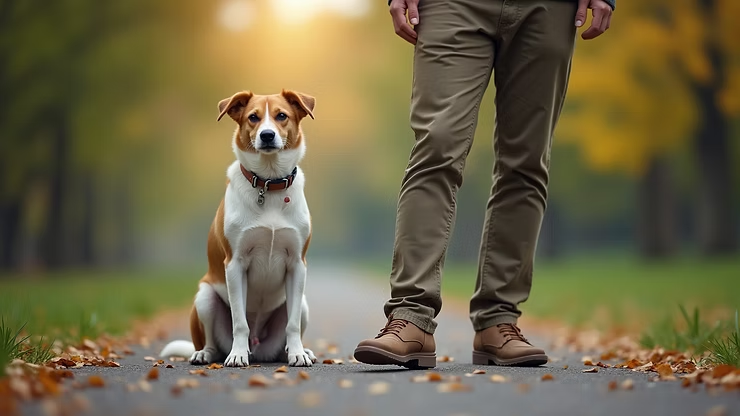
Calm dog sitting beside owner during leash training
Can you train leash reactivity out of a dog?
Many dog owners wonder if leash reactivity can be completely “trained out.” The honest answer is that while you might not erase reactivity entirely, you can significantly reduce it and teach your dog to manage their reactions better.
Leash reactivity often stems from fear, frustration, or lack of socialization. By addressing these root causes, you can help your dog feel more secure. Training helps your dog learn new ways to respond to triggers, replacing reactive behaviors with calm ones.
Here’s what you can expect:
Improved focus: Your dog learns to pay attention to you instead of distractions.
Better impulse control: They start to resist the urge to lunge or bark.
Increased confidence: Your dog feels safer and more comfortable on walks.
Stronger bond: Training builds trust and communication between you and your dog.
Remember, every dog is unique. Some may respond quickly, while others need more time. Celebrate the progress you make together.
Tools and Techniques for Effective Training
Choosing the right tools and techniques can make a big difference in your reactive dog leash training journey. Here are some essentials that I’ve found helpful:
Tools
A sturdy, comfortable leash: Avoid retractable leashes. A 4-6 foot leash gives you control without too much slack.
A well-fitting harness or head halter: These can help reduce pulling and give you better control.
High-value treats: Use small, tasty treats your dog loves to reward calm behavior.
Clicker (optional): Clicker training can mark good behavior precisely.
Techniques
Counter-conditioning: This means changing your dog’s emotional response to triggers. For example, if your dog reacts to other dogs, give treats when they see a dog but don’t react.
Desensitization: Gradually expose your dog to triggers at a distance where they feel safe, then slowly decrease that distance over time.
Focus exercises: Teach your dog to look at you on cue. This redirects their attention away from distractions.
Loose leash walking: Reward your dog for walking without pulling. Stop or change direction if they pull.
Consistency is key. Practice these techniques regularly, and keep sessions positive and upbeat.
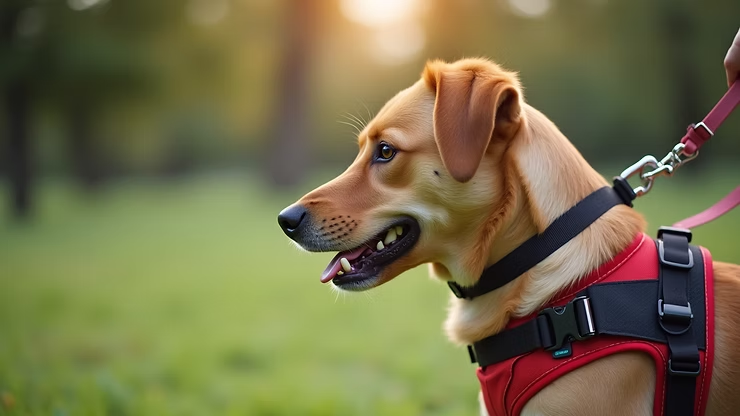
Dog wearing harness and leash during training session
How to Train a Reactive Dog on Leash
If you’re ready to start training, here’s a simple plan to get going. For a detailed guide, you can check out this helpful resource on how to train a reactive dog on leash.
Step 1: Identify Triggers
Watch your dog carefully to see what causes their reactivity. Is it other dogs, people, bikes, or something else? Knowing the triggers helps you plan your training.
Step 2: Create a Safe Distance
Start training at a distance where your dog notices the trigger but doesn’t react. This might be across the street or down the block.
Step 3: Reward Calm Behavior
When your dog sees the trigger but stays calm, immediately reward them with treats and praise. This teaches them that calmness brings good things.
Step 4: Gradually Decrease Distance
Over time, move closer to the trigger, always rewarding calm behavior. If your dog starts reacting, increase the distance again.
Step 5: Practice Focus and Commands
Teach your dog to look at you or sit when they see a trigger. Use treats and a happy voice to keep their attention.
Step 6: Be Patient and Consistent
Training takes time. Celebrate small wins and keep sessions short and positive.
Tips for Everyday Walks with a Reactive Dog
Walking a reactive dog can be stressful, but with some planning, you can make it enjoyable for both of you. Here are some tips I use:
Choose quiet routes: Avoid busy streets or crowded parks during peak times.
Keep your dog on a short leash: This gives you better control and helps your dog feel secure.
Bring treats and toys: Use them to distract and reward your dog.
Watch your body language: Stay relaxed and confident.
Use calming cues: Some dogs respond well to a gentle “easy” or “let’s go.”
Take breaks: If your dog gets overwhelmed, pause and let them calm down.
Remember, every walk is a chance to practice and build your dog’s confidence.
Building a Strong Partnership
Training a reactive dog on a leash is more than just teaching commands. It’s about building a strong, trusting relationship. Your dog looks to you for guidance and reassurance. When you approach training with kindness and patience, you create a safe space for your dog to grow.
Celebrate your dog’s progress, no matter how small. Each calm moment on a walk is a victory. And remember, you’re not alone. Many dog owners face similar challenges, and with the right support, you and your dog can thrive together.
If you want to deepen your skills or need extra help, consider working with a professional trainer who understands reactive dogs. They can tailor a plan just for you and your furry friend.
Training a reactive dog on a leash is a journey filled with learning, patience, and love. With the right tools, techniques, and mindset, you can help your dog feel more relaxed and happy on every walk. Keep going – your dog is lucky to have you by their side!